taliban

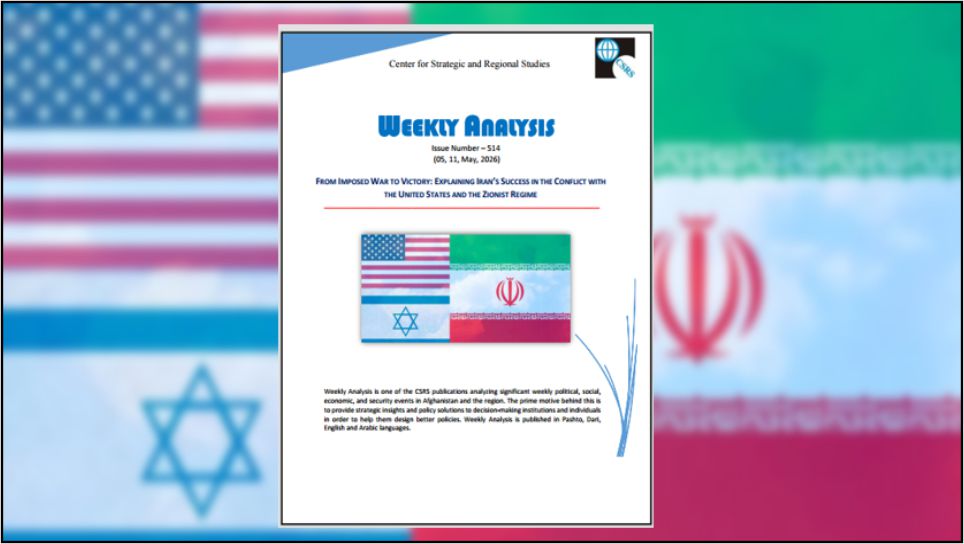
From Imposed War to Victory: Explaining Iran’s Success in the Conflict with the United States and the Zionist Regime

In conclusion, the most important point to emphasize in this analysis is the gap between what the United States and the Zionist regime assumed about Iran’s system and what they actually encountered in practice. They believed that by removing a small number of individuals at the top, the entire system would collapse. However, Iran demonstrated that it possesses a multi-layered and distributed structure—one in which the failure of a single component does not paralyze the whole system.

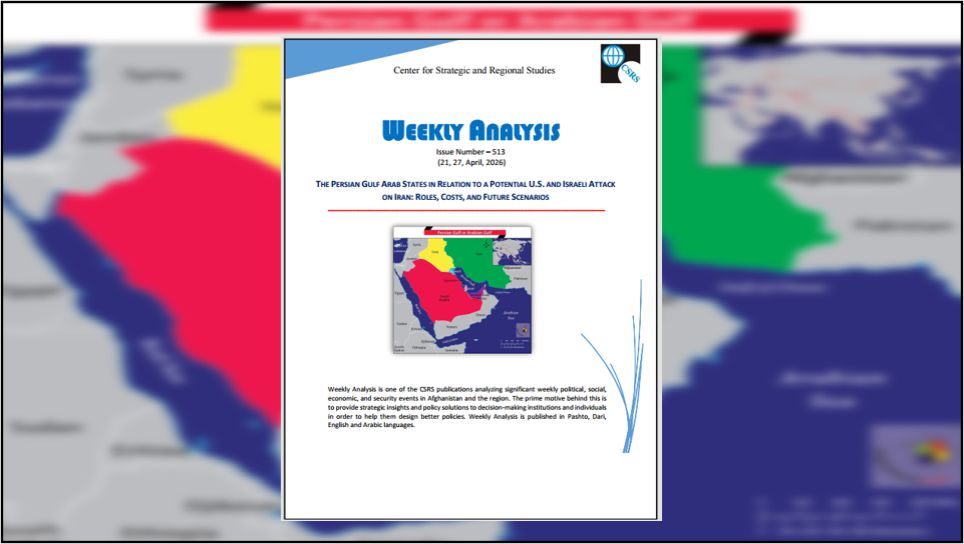
The Persian Gulf Arab States in Relation to a Potential U.S. and Israeli Attack on Iran: Roles, Costs, and Future Scenarios

The Persian Gulf states find themselves in a complex and multi-layered position in the conflict between the U.S.–Israeli axis and Iran, where their strategic choices have the potential to significantly shape the future of the region. The continuation of a defensive posture, while less costly and more conducive to faster recovery and reconstruction, would still mean the persistence of uncertainty and ongoing economic pressure. It may reduce immediate military risks, but it does not fully eliminate long-term security concerns or regional instability.

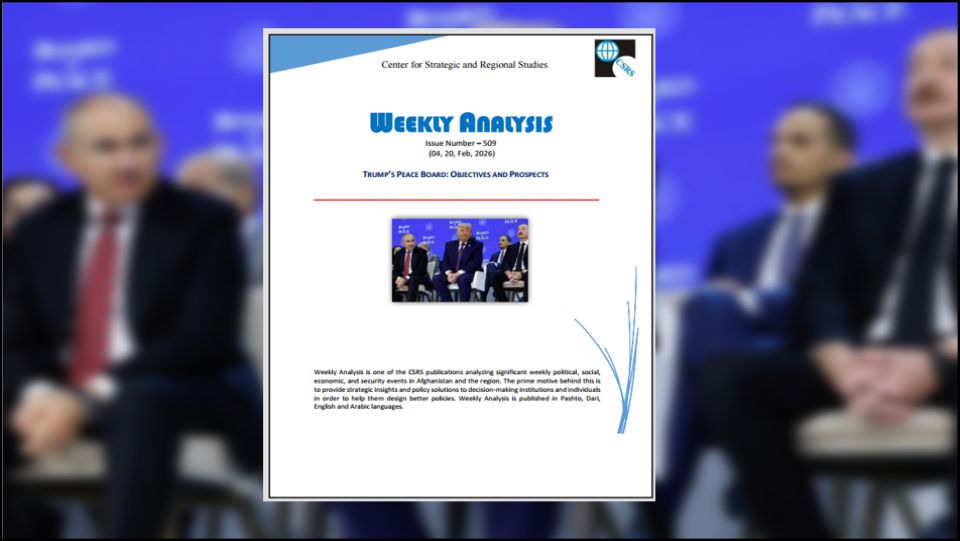
Trump’s Peace Board: Objectives and Prospects

The Peace Board established by Donald J. Trump has been publicly presented as an initiative to end the Gaza war and contribute to the resolution of international conflicts. However, an examination of its charter indicates that the Board does not constitute a neutral multilateral international organization, but rather a highly personalized institution under Trump’s direct control.

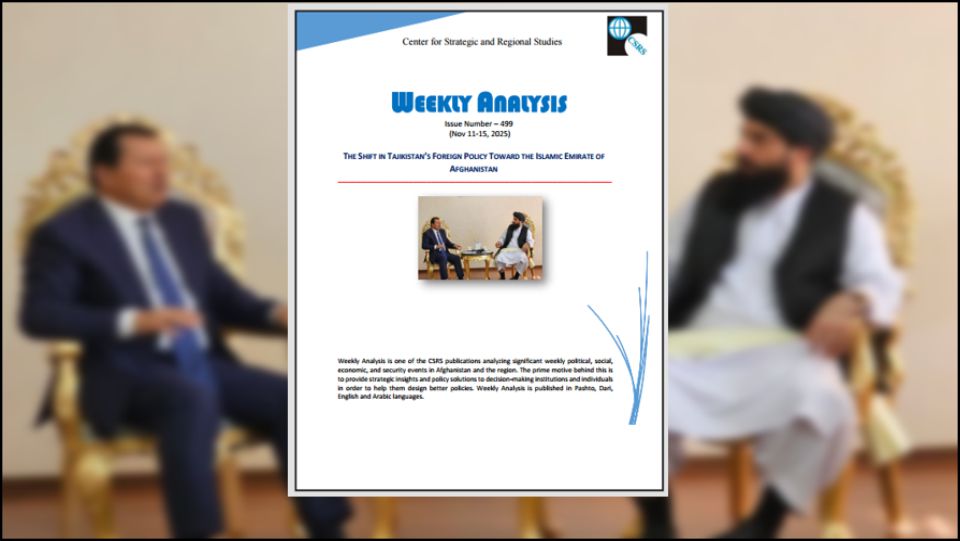
The Shift in Tajikistan’s Foreign Policy Toward the Islamic Emirate of Afghanistan

An examination of Tajikistan’s behavioral and rhetorical patterns indicates that the country’s foreign policy toward the Islamic Emirate of Afghanistan has undergone a fundamental transformation

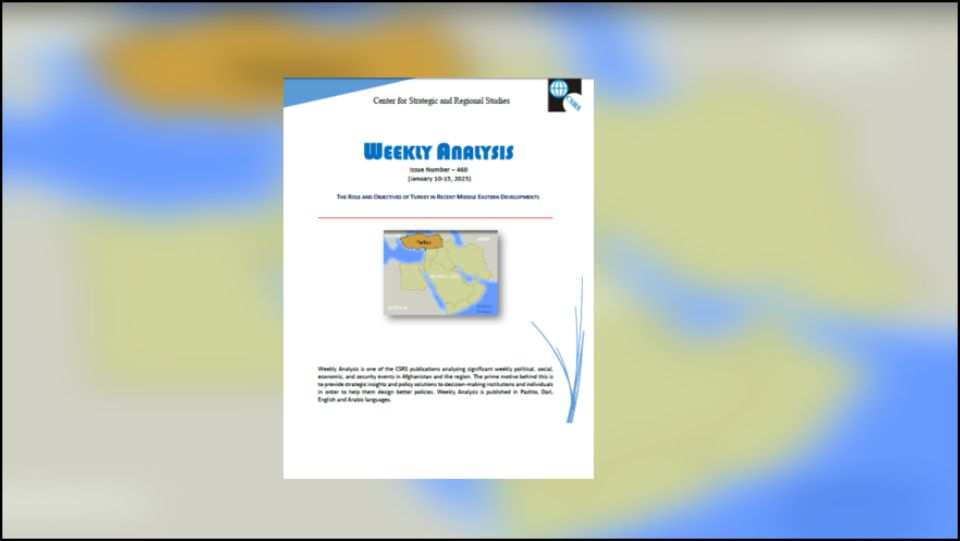
The Role and Objectives of Turkey in Recent Middle Eastern Developments

Turkey is making significant efforts to achieve its goals in Middle Eastern politics, striving to establish itself as a leading regional power. This ambition has led Turkish leaders to refer to the current era as the “Turkish Century.” Turkey is working to strengthen its influence across various fields, particularly in science, technology, economics, and diplomacy. To overcome regional and global challenges, Turkey alternates between aligning with Western nations and collaborating with coalitions led by Russia and China, such as BRICS.

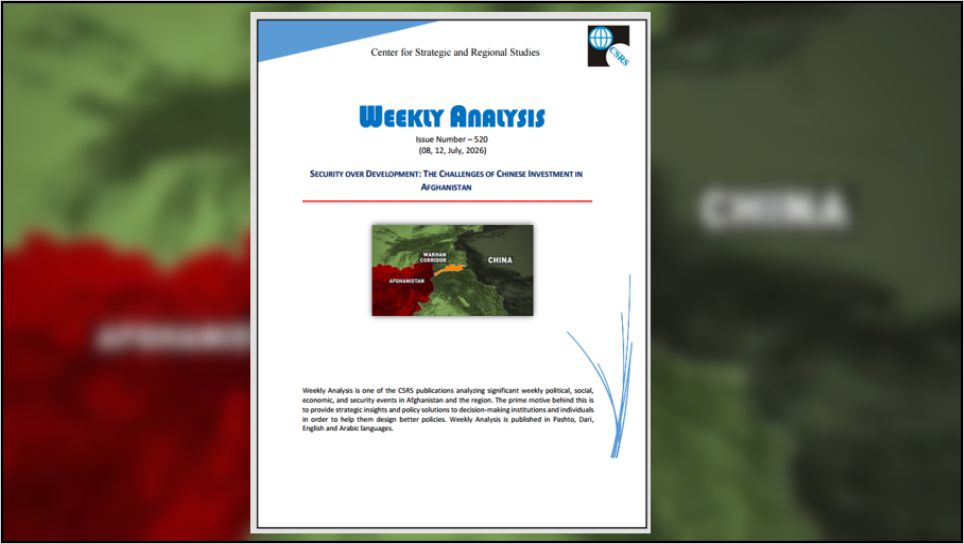
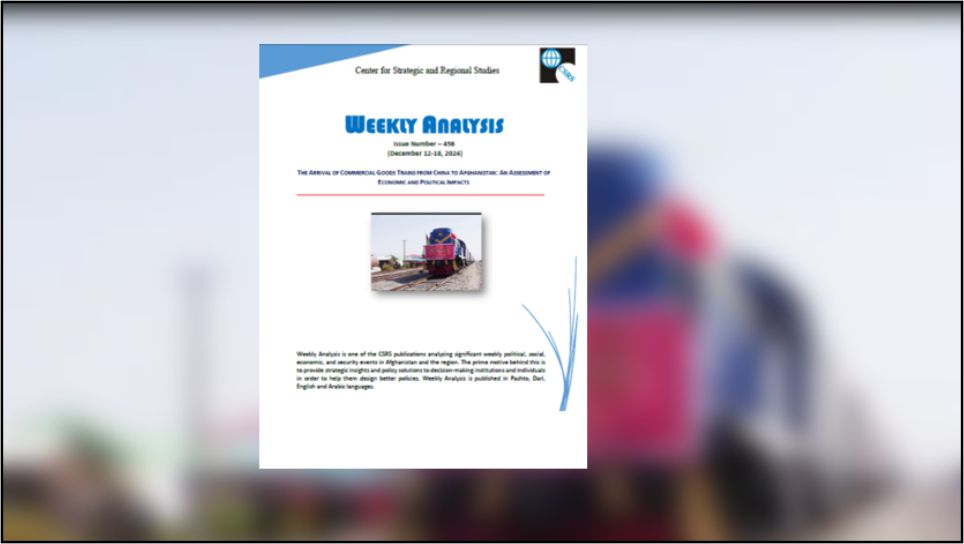
The Arrival of Commercial Goods Trains from China to Afghanistan: An Assessment of Economic and Political Impacts

This article thoroughly analyzes the railway cargo transport initiative from China, highlighting it as a significant economic and political opportunity for Afghanistan. Through this initiative, Afghanistan can strengthen its trade and political relations with China and other regional countries.

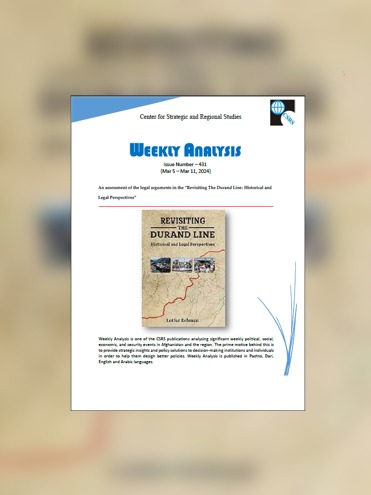
An assessment of the legal arguments in the “Revisiting The Durand Line: Historical and Legal Perspectives”

The Durand Agreement has created a conflict between Pakistan and Afghanistan, and researchers and politicians from both sides argue in favor of their country, Pakistan gives reasons to approve the Durand Agreement and accept this border as an official border. Afghan researchers give reasons for not accepting it.

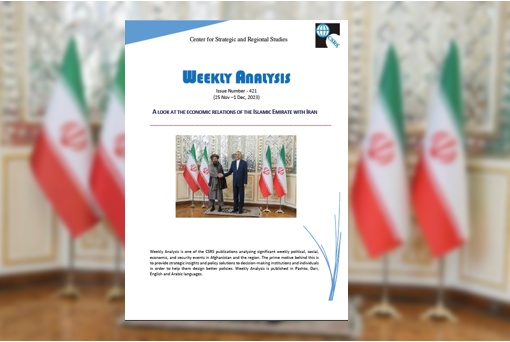
A LOOK AT THE ECONOMIC RELATIONS OF THE ISLAMIC EMIRATE WITH IRAN

Iran’s economic policy towards Afghanistan includes three major issues. The first issue is the growth of exports bringing it to ten billion dollars.

AFGHANISTAN’S PLACE IN CHINA’S REGIONAL PLANS

The Islamic Emirate should strategically design effective diplomacy strategies to cultivate relations with nations, including China. These strategies must underscore national interests and prioritize the preservation of the nation’s independence and sovereignty.

Scroll to top