
Biography
Sayed Israr Samim is a Ph.D. student at the Faculty of Social Sciences, Universitas Islam Internasional Indonesia (UIII). He previously served as Vice Chancellor of Bayazid University in Khost, Afghanistan, and has published several articles in international journals. His research focuses on international relations, and he currently contributes as a reviewer for the Tabish International Journal of Social Sciences.
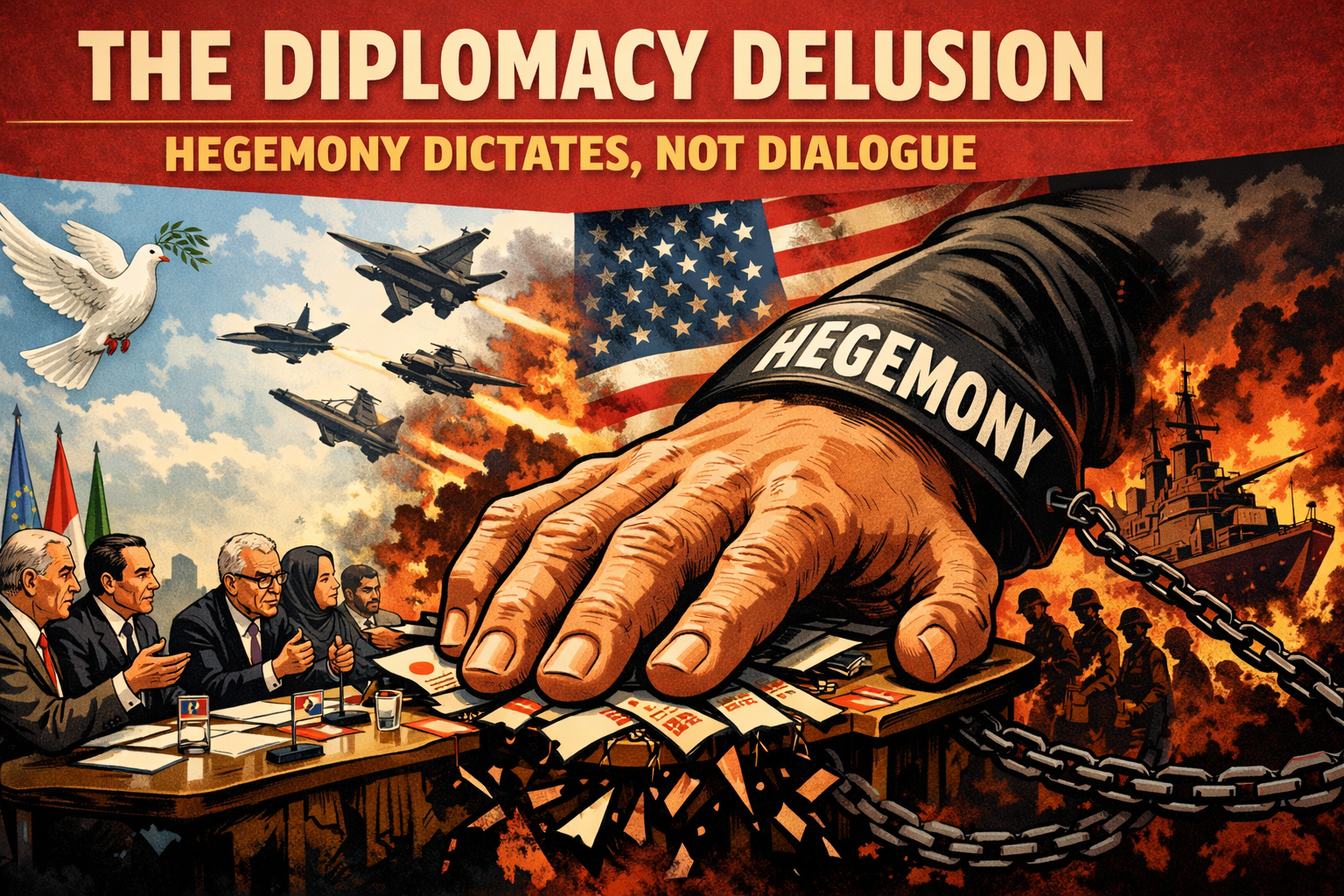
Title: The Diplomacy Delusion: Hegemony Dictates, Not Dialogue
Every round begins with hope but ends with hostility. Diplomacy promises peace, but not in the case of the US-Iran relationship.
Each time the Washington and Tehran diplomats come to the negotiating table, the same cycle unfolds: optimistic beginning, carefully negotiated frameworks, and then inevitable hostility. Many observers interpret this recurring cycle as the failure of leadership or contrasting policies. I argue that its roots are structural. It reminds us that in the international system, hegemony and power maximization replace dialogue with competition. The absence of a supreme referee in global politics leads to strategic competition among nation-states. When one state gains greater strategic leverage over the other state, the former may eventually exploit that leverage against the latter. This situation undermines certainty and trust, which not only complicates negotiation but makes it useless. States care about relative gain, which alters the balance of power.
The US-Iran confrontation perfectly captures the pattern of precarious peace, as both sides are constantly suspicious of exploitation by the other. For the US, releasing sanctions on Iran, like sanctions to disrupt Iran’s weapons procurement network, sanctions on Iran’s energy export, sanctions on Iran’s “Shadow Banking” Network, and recognizing Iran diplomatically, are strategic losses because they fear it will lead Iran to expand its regional influence. For Iran, compromising on the nuclear program seems risky because it will weaken its capacity to deter regional and international hostilities.
Supporting proxies by Iran, like Hezbollah in Lebanon, and Houthis in Yemen, further demonstrates these incompatible security needs. Iran asserts these as defensive measures to secure their interests in the region. However, for the United States and its allies, the pursuit of proxies is a source of tension and offensive tools that threaten their interests in the region. These contradictory interpretations create and intensify the security dilemma. The underlying dynamic demonstrates that this security dilemma discourages concessions in negotiations because each side fears that compromise will lead to greater vulnerability. As a result, the proxy networks supported by Iran undermine diplomatic efforts and contribute to the fragility of peace.
Iran’s nuclear program illustrates a similar structural problem. Iran perceives it as a sovereign right and a necessary deterrent, while for the United States and its allies, it represents a pathway to nuclear weapons, which will shift the balance of power in the region. Because each side is concerned about the other’s potential gain, reaching an agreement becomes complicated to sustain. The nuclear negotiation highlights the battle for competitive advantage clearly. It replicates the reality that even small concessions on nuclear weapons can decisively alter the distribution of power.
Historically, the US-Iran negotiations manifest the limits of cooperation under anarchy. For instance, the Joint Comprehensive Plan of Action (JCPOA) aimed to control Iran’s nuclear program in exchange for billions of dollars’ worth of sanctions relief. However, this agreement did not eliminate the existing mistrust between the two states. The US withdrew from the agreement in 2018, arguing that it failed to address Iran’s missile program. From a structural point of view, the collapse of the JCPOA is a predictable outcome. Without trust, sustaining agreements is not possible because states are uncertain about others’ future intentions, which may disadvantage them in the long run. This agreement is concrete evidence and shows that diplomatic cooperation is fundamentally fragile.
Furthermore, the 11th April peace talks between the US and Iran follow the same pattern. However, the US announces a ceasefire even before the negotiation starts. Without reliable implementation mechanisms, states could not trust each other’s future intentions. As a result, states interpret such temporal pauses as strategic movements to avoid immediate costs and to regroup, reassess, and strengthen their own strategic positions.
Additionally, the interplay of power struggles and persistent suspicion erodes the possibility of a durable peace. This structural limitation will always interrupt even a well-made diplomatic framework. States always calculate how agreements affect the dynamics of power. The Iran-US case demonstrates exactly what the international structure dictates. The history of negotiation between them possesses memories of violation. It illustrates that diplomacy operates narrowly. It can result in short pauses to conflict, but cannot resolve it. Without a fundamental change in the structure of the international system, mistrust will outweigh cooperation among states.
Ultimately, the realities of the international structure explain why these dialogues remain so tenuous. Anarchy makes cooperation difficult. States’ uncertainty about each other’s intentions, fear of deception because of the absence of higher enforcement authority over states, and concern over who will hold the upper hand force them to prioritize security over compromise. Iran’s strategy to support proxy groups in the region, the divergent interpretation about its nuclear program, and the withdrawal of the US from the JCPOA all demonstrate how these structural pressures operate in practice.