Foreign Policy

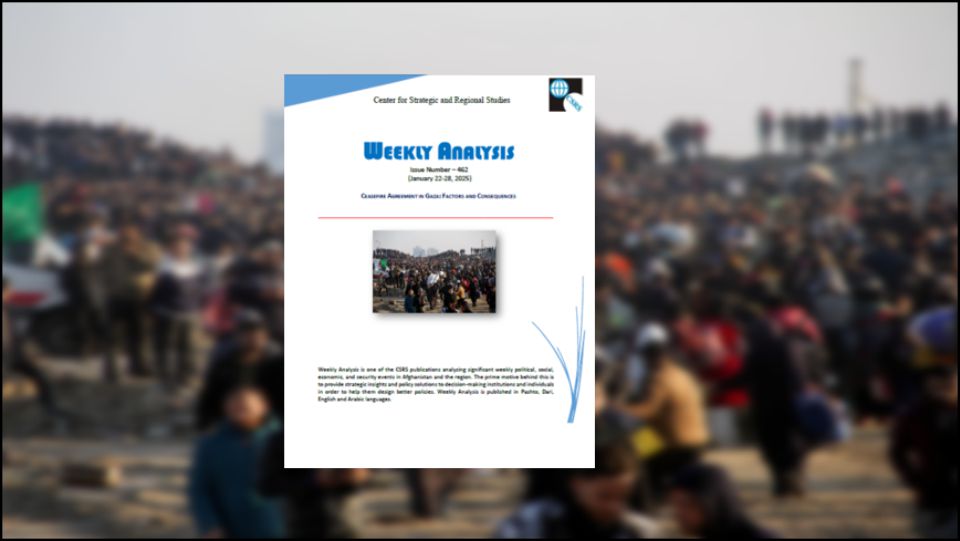
Ceasefire Agreement in Gaza: Factors and Consequences

In conclusion, despite the Israeli regime’s brutality and significant military losses, they have not achieved any of their objectives during the war. Multiple factors, including American pressure, regional efforts such as mediation by countries like Qatar and Egypt, and the steadfastness of the Palestinian people and their brave resistance fighters, compelled the Israeli regime to agree to this ceasefire. This agreement has not fulfilled any of their goals except for the release of Israeli prisoners from Hamas, in exchange for which even large numbers of Palestinian prisoners were freed.

An Overview of the Major Events of 2024

The analysis of global and Afghan developments in 2024 reveals a year filled with significant political, security, and economic events. Politically, the year witnessed substantial leadership transitions in many countries, with over seventy nations experiencing changes in government. Among these, the shift of power in the United States from Democrats to Republicans, particularly the return of the controversial figure Donald Trump, is likely to have a profound impact on global politics in the years ahead.

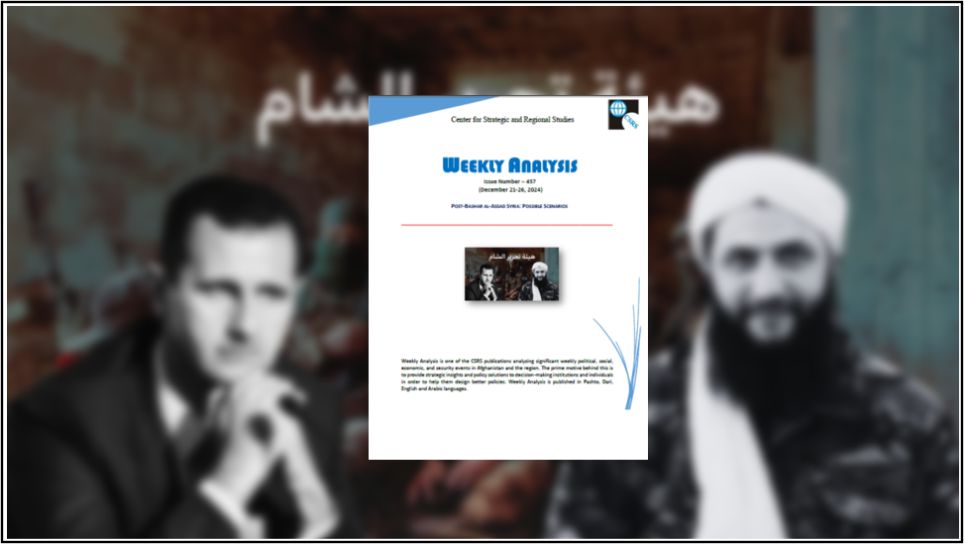
Post-Bashar al-Assad Syria: Possible Scenarios

Perhaps if Bashar al-Assad had shown political wisdom and responded positively to the demands of the Arab Spring protesters early on, the conflict would not have escalated into a civil war with half a million deaths, millions of displaced people, and widespread destruction. Assad’s resistance to his people’s legitimate demands and reliance on foreign support led to the devastation of the country, and ultimately, he was disgracefully exiled.

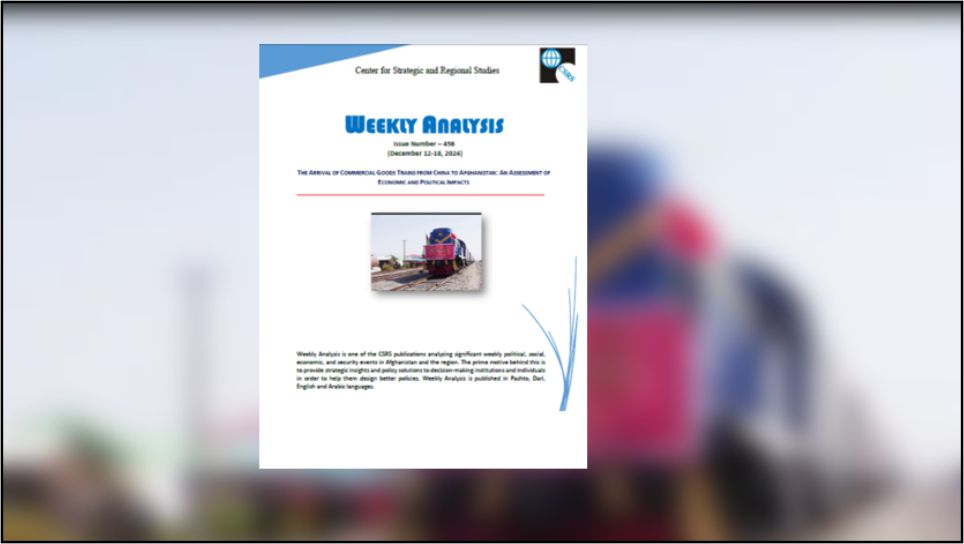
The Arrival of Commercial Goods Trains from China to Afghanistan: An Assessment of Economic and Political Impacts

This article thoroughly analyzes the railway cargo transport initiative from China, highlighting it as a significant economic and political opportunity for Afghanistan. Through this initiative, Afghanistan can strengthen its trade and political relations with China and other regional countries.

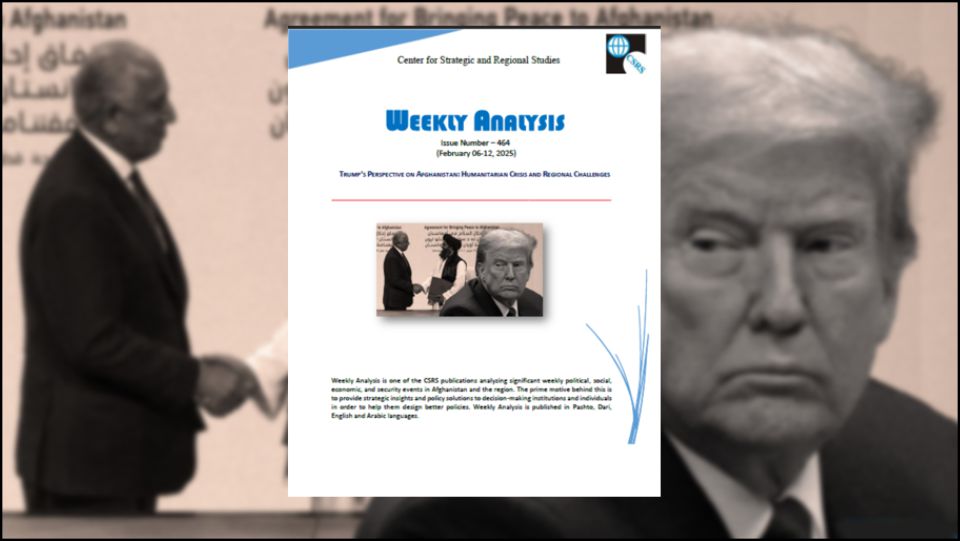
U.S. FOREIGN POLICY TOWARDS THE ISLAMIC EMIRATE

There are three ways for the United States to engage with the Islamic Emirate:

Complete Isolation: Isolate the Islamic Emirate entirely and impose additional severe restrictions until they meet the U.S. demands.

Official Recognition: Recognize the Islamic Emirate officially and establish formal diplomatic relations with it.

Engagement without Recognition: Neither isolate it completely nor officially recognize it, but rather engage with it without formal recognition until the Islamic Emirate makes changes in its domestic policies.

So far, the United States has chosen the third path.

The specific objectives of U.S. foreign policy towards the Islamic Emirate include combating terrorism, fighting for the education and employment rights of girls, preventing drug trafficking, providing aid to prevent a humanitarian crisis, and evacuating U.S. allies from Afghanistan, and applying restrictions and pressure to make the Islamic Emirate meet its demands.

THE SUDDEN DEATH OF IRAN’S HIGHEST POLITICAL OFFICIALS AND ITS IMPACT ON THE REGION

By: Center for Strategic & Regional Studies Note: Click here for the PDF file of this analysis. ___________________________________________________________________ In this issue: The Sudden Death […]

A LOOK AT THE ISLAMIC EMIRATE OF AFGHANISTAN RELATIONSHIP WITH TAJIKISTAN

Tajikistan and Afghanistan as two neighboring countries, have many things in common which include historical background, religious, ethnic, linguistic, and cultural. Each of the two countries never feel comfortable without having good political relations.

POWER STRUGGLES IN PAKISTAN’S ELECTIONS AND POSSIBLE FUTURE SCENARIOS IN AFGHANISTAN

Based on the above, we conclude that if the future government of Pakistan is formed by the election team of the Muslim League Nawaz in coalition with the Pakistan People’s Party, due to the dissatisfaction of the absolute majority of Pakistan citizens (who identified themselves as supporters of Imran Khan in the elections), The intensification of the attacks from TTP and finally the freedom-loving and independence-seeking approach of the Afghans will cause the Pakistani authorities to accuse the Afghan government which will negatively impact the relationship between the Islamic Emirate and Pakistan affecting Afghanistan’s economy due to the creation of friction in the trade route to South Asia and even China from Pakistan, as well as creating political pressure that can have an unpleasant future for the Islamic Emirate

Scroll to top