Region & World

Trump’s Perspective on Afghanistan: Humanitarian Crisis and Regional Challenges

Overall, Trump’s policies toward Afghanistan are unlikely to achieve their intended goals. Instead, they risk deepening the country’s humanitarian, economic, and political crises. His dual approach—reducing U.S. military involvement while simultaneously exerting pressure on the Islamic Emirate and politicizing humanitarian aid—fails to provide a viable solution for Afghanistan’s challenges.

An Overview of the Iranian Foreign Minister’s Visit to Kabul

Since the return of the Islamic Emirate to power, relations between Iran and Afghanistan have continued as before. Over the past three years, both countries have made efforts to strengthen their ties by leveraging each other’s capacities, particularly in boosting economic cooperation. Recently, Iran sent its Foreign Minister to Kabul in an attempt to deepen its relationship with Afghanistan.

An Overview of the Major Events of 2024

The analysis of global and Afghan developments in 2024 reveals a year filled with significant political, security, and economic events. Politically, the year witnessed substantial leadership transitions in many countries, with over seventy nations experiencing changes in government. Among these, the shift of power in the United States from Democrats to Republicans, particularly the return of the controversial figure Donald Trump, is likely to have a profound impact on global politics in the years ahead.

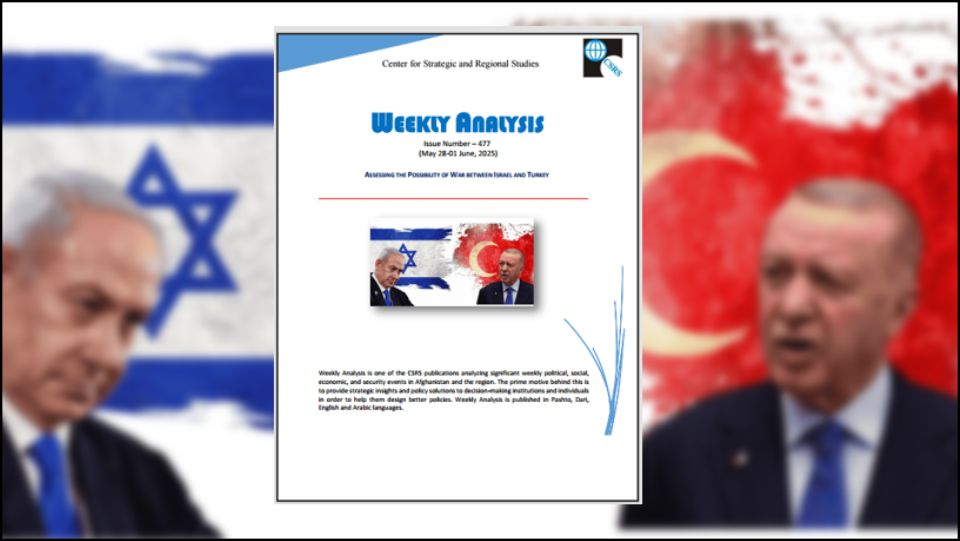
The Role and Objectives of Turkey in Recent Middle Eastern Developments

Turkey is making significant efforts to achieve its goals in Middle Eastern politics, striving to establish itself as a leading regional power. This ambition has led Turkish leaders to refer to the current era as the “Turkish Century.” Turkey is working to strengthen its influence across various fields, particularly in science, technology, economics, and diplomacy. To overcome regional and global challenges, Turkey alternates between aligning with Western nations and collaborating with coalitions led by Russia and China, such as BRICS.

Tensions between the Islamic Emirate and the Pakistani Government: Their Impact on Bilateral Relations

The main reason behind the recent conflict between the Islamic Emirate and Pakistan is the issue of Tehrik-i-Taliban Pakistan (TTP). The Pakistani government accuses the Islamic Emirate of providing safe havens to TTP and collaborating with them across the Durand Line. Although the Islamic Emirate has consistently denied these allegations, asserting that Afghan soil will not be used against anyone, Pakistan does not trust these statements. Consequently, Pakistan has continued to conduct airstrikes in Paktika and other regions, claiming to target TTP fighters.

The Objectives of China and Russia in Afghanistan: Points of Convergence and Divergence

In the past, the presence of the United States in Afghanistan and the establishment of a pro-Western government were significant obstacles to the greater involvement of China and Russia in the country. However, with the U.S. withdrawal and the resurgence of the Islamic Emirate, a major opportunity has opened for Asian powers—particularly Russia and China—to expand their political, security, and economic influence in Afghanistan.

An Analytical Overview of Trump And Harris’s Foreign Policy

By: Center for Strategic & Regional Studies Note: Click here for the PDF file of this analysis. ___________________________________________________________________ In this issue: An Analytical Overview […]

A LOOK AT THE ISLAMIC EMIRATE OF AFGHANISTAN RELATIONSHIP WITH TAJIKISTAN

Tajikistan and Afghanistan as two neighboring countries, have many things in common which include historical background, religious, ethnic, linguistic, and cultural. Each of the two countries never feel comfortable without having good political relations.

POWER STRUGGLES IN PAKISTAN’S ELECTIONS AND POSSIBLE FUTURE SCENARIOS IN AFGHANISTAN

Based on the above, we conclude that if the future government of Pakistan is formed by the election team of the Muslim League Nawaz in coalition with the Pakistan People’s Party, due to the dissatisfaction of the absolute majority of Pakistan citizens (who identified themselves as supporters of Imran Khan in the elections), The intensification of the attacks from TTP and finally the freedom-loving and independence-seeking approach of the Afghans will cause the Pakistani authorities to accuse the Afghan government which will negatively impact the relationship between the Islamic Emirate and Pakistan affecting Afghanistan’s economy due to the creation of friction in the trade route to South Asia and even China from Pakistan, as well as creating political pressure that can have an unpleasant future for the Islamic Emirate

Scroll to top