
By: Center for Strategic & Regional Studies
Note: Click here for the PDF file of this analysis.
___________________________________________________________________
In this issue:
-
- The Recent Gathering of Pakistani Religious Scholars and Their Role in Improving Relations with Afghanistan
- The Role of Religious Scholars in Pakistan’s Foreign Policy
- The Role of Religious Scholars in Afghanistan–Pakistan Relations
- An Assessment of the Recent Gathering of Pakistani Religious Scholars
- Conclusion
- Recommendations
- References
______________________________________________
Introduction
Religion has been an inseparable component of relations between Pakistan and Afghanistan. For this reason, it is necessary to examine the relationship between Pakistan’s religious class and Afghanistan, as well as the role religious scholars have played in shaping these relations. Since the establishment of Pakistan, a fundamental question has been raised: what role should Islam play in the structure of the Pakistani state? The new generation of Pakistani leaders and politicians opposed the creation of a religious state, whereas the religious class and scholars—who had played a significant role in the formation of Pakistan and in the struggle against British colonial rule—believed that Islamic law (Sharia) should constitute the sole foundation of state sovereignty. Over time, this debate intensified and eventually led to the adoption of religion as a sustained state policy, defining Pakistan’s identity as an Islamic state. Although religion became an important element of the state and religious authority was largely concentrated in the hands of scholars, the religious class was unable to assume full political representation of the population. They also failed to present a comprehensive model of an Islamic system, secure broad public support through electoral means, or develop sufficient expertise in modern governance. Nevertheless, despite not holding central political power for extended periods, Pakistan’s religious scholars have continued to play an influential role in Afghan affairs. A prominent example of this influence is their contribution to the success of the Afghan jihad against the Soviet Union. On Monday, 22 December 2025, Pakistani religious scholars convened a meeting titled “Unity of the Pakistani Ummah.” During this gathering, relations between Afghanistan and Pakistan were once again discussed. This analysis seeks, on the one hand, to examine the role of religion in Pakistan’s foreign policy and, on the other, to clarify the role of Pakistani religious scholars in shaping relations between Afghanistan and Pakistan.
The Role of Religious Scholars in Pakistan’s Foreign Policy
Before the creation of Pakistan, prominent religious leaders such as Maulana Madani, Maulana Muhammad Mia, Maulana Syed Fakhruddin Ahmad, Maulana Abdul Haq, and Maulana Ahmad Ali Saeed opposed the establishment of an independent state for Muslims and issued religious edicts (fatwas) to that effect. Maulana Abul A‘la Maududi, the founder of Jamaat-e-Islami, although not opposed to the idea of a separate Muslim state called Pakistan, rejected the Muslim League and its theory of Muslim nationalism. His argument was based on the belief that a national government founded on secularism or Muslim nationalism would, in essence, differ little from the colonial government of British India. In his view, nationalism was a foreign concept introduced by colonial powers to undermine the unity of the Islamic world. Despite such opposition, the Muslim League succeeded in securing the support of several influential religious figures from Jamiat Ulema-e-Islam, as well as Maulana Akram Khan, Pir Manki Sharif, and Maulana Shabbir Ahmad Usmani, who actively campaigned in favor of the Muslim League’s cause. On 26 October 1945, five hundred religious scholars—including a number of pirs and Sufi leaders—gathered and adopted a resolution supporting the demand for a separate homeland for Muslims, a development that ultimately led to the creation of Pakistan. Considering this early role of religious scholars in the establishment of Pakistan, it can be argued that they had the potential to play an active role in the country’s foreign policy, and at times this role became visible. For instance, on 29 November 1962, during a speech on foreign policy in the National Assembly, Maulana Mufti Mahmood, leader of Jamiat Ulema-e-Islam (JUI), opposed Western-sponsored military alliances and Pakistan’s participation in them, emphasizing the need for an independent foreign policy. Following the establishment of Pakistan, ideology was highlighted as a significant factor across various dimensions of the country’s foreign policy and played a substantive role. From the outset, Pakistan made serious efforts to cultivate special relations with the Muslim world, claiming to be the only contemporary state founded explicitly in the name of Islam and therefore entitled to close ties with other Islamic countries. However, the state ultimately adopted a realist approach and, in response to its defense requirements and security challenges, aligned itself with Western powers and, at times, with communist states—an approach that conflicted with the views of the religious scholars. The state maintained that foreign policy and religion should be kept separate. Over time, the influence of religious scholars in foreign policy declined, while the roles of the state and the military became more dominant. Nevertheless, both the government and the military continued to rely on the religious class for political and social legitimacy and therefore pursued policies aimed at controlling and managing them. From this period onward, the religious class ceased to function as a governing force and instead became an instrument of the state. When the government strengthened its relations with the West, it sought religious endorsements to shape public opinion and to prevent popular opposition. Religious scholars issued fatwas declaring that seeking military and economic support from Western countries was necessary for strengthening an Islamic state and posed no religious objection. The state similarly employed religious scholars in the issues of Kashmir and Palestine, using them as instruments of ideological warfare against India. In summary, Pakistan’s religious scholars neither possessed the authority nor exercised effective control over the formulation and management of the country’s foreign policy.
The Role of Religious Scholars in Afghanistan–Pakistan Relations
Following the establishment of Pakistan, connections were formed between Pakistani religious scholars and their Afghan counterparts, leading to cooperation across various domains. This cooperation initially focused on religious education and gradually expanded to include active participation in jihad against the Soviet Union. In Pakistan, Jamiat Ulema-e-Islam (JUI) and Jamaat-e-Islami have historically been the two most significant movements maintaining close ties with Afghanistan’s religious class. Prominent Afghan figures such as Professor Burhanuddin Rabbani and Engineer Gulbuddin Hekmatyar were influenced by the ideological foundations of Jamaat-e-Islami and, through this intellectual and organizational channel, established links with the Pakistani state. The Soviet invasion of Afghanistan had far-reaching consequences, most notably the mass displacement of Afghans to Pakistan, where many pursued education—particularly in religious seminaries—thereby developing under new ideological influences. Maulana Fazlur Rahman is regarded as one of the key supporters of the Islamic Emirate. He provided support at diplomatic, financial, strategic, and operational levels. He traveled to Washington, Saudi Arabia, and the Gulf states, securing substantial financial assistance. Within Pakistan, religious seminaries—especially those affiliated with Maulana Fazlur Rahman—became centers for collecting donations from various segments of society as well as from state institutions in support of the Islamic Emirate. In addition to Maulana Fazlur Rahman, Maulana Sami-ul-Haq also maintained close relations with the Taliban. His seminary, Darul Uloom Haqqania, served as a major educational institution for leaders of the Islamic Emirate. Consequently, when the Islamic Emirate gained control over Afghanistan in 1996, Maulana Fazlur Rahman’s political significance in Pakistan increased. He was appointed Chairman of the Parliamentary Standing Committee on Foreign Affairs, reflecting the state’s intention to utilize his influence in managing relations with Afghanistan. Within this framework, Fazlur Rahman developed close ties with the Inter-Services Intelligence (ISI), the military, and General Naseerullah Babar, who served as the principal adviser on Afghan affairs to both Zulfikar Ali Bhutto and, later, Benazir Bhutto. This clearly demonstrates that Pakistan relied on Maulana Fazlur Rahman as an intermediary to consolidate relations with the Islamic Emirate and to shape its foreign policy toward Afghanistan. During the first period of the Islamic Emirate, Maulana Fazlur Rahman led several delegations of religious scholars to Kabul and held meetings with the Emirate’s leadership. This indicates the existence of direct relations between Pakistani religious scholars and the Taliban, through which these scholars became important channels for conveying narratives of the Emirate’s governance and perceived successes to the outside world. The majority of leaders and fighters of the Islamic Emirate were educated in seminaries located in Khyber Pakhtunkhwa, Balochistan, and other tribal regions of Pakistan, most of which were affiliated with Jamiat Ulema-e-Islam under the leadership of Maulana Fazlur Rahman. Overall, from a historical perspective, the relationship between Pakistani religious scholars and Afghanistan—during the Mujahideen period as well as during the first and second phases of the Islamic Emirate—has been close, and these scholars have played a role in shaping and regulating bilateral relations. By contrast, during the communist period and the previous republican era, when religious scholars had a limited role within the Afghan government, Pakistani religious scholars similarly played little to no role in managing Afghanistan–Pakistan relations.
An Assessment of the Recent Gathering of Pakistani Religious Scholars
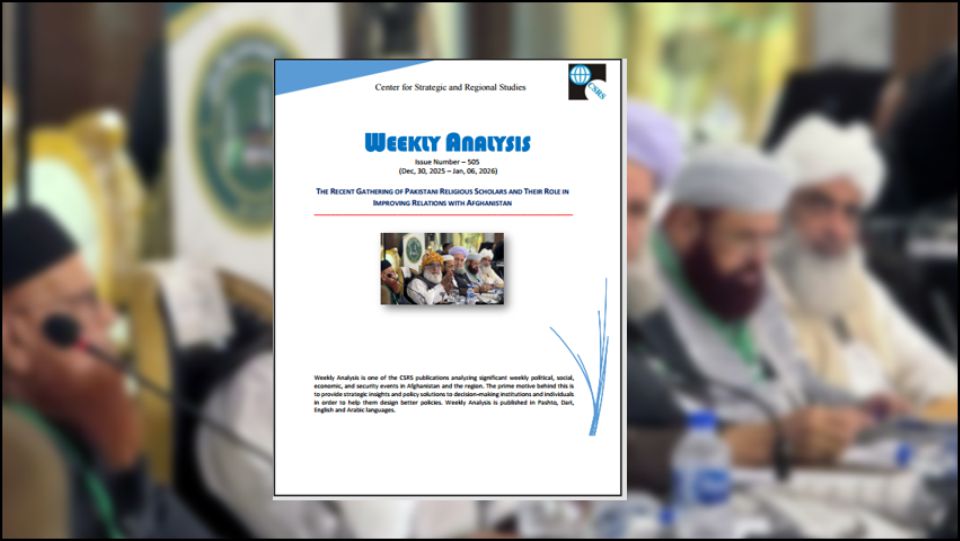
On Monday, 22 December 2025, Pakistani religious scholars convened a meeting in Karachi under the title “Unity of the Pakistani Ummah,” chaired by Maulana Fazlur Rahman. One of the main drivers behind the organization of this gathering was growing public pressure. The population of Pakistan, in general, and residents of the tribal areas, in particular, have been facing severe economic hardship due to the closure of border crossings. These communities raised their voices in protest, and in order to reduce these pressures and calm public opinion, the scholars organized this meeting. However, the significance of the gathering would have been greater had it carried an executive or operational dimension. Instead, the meeting remained limited to issuing recommendations, calling for improved relations and the reopening of border crossings, without offering any concrete mechanisms for implementation. The scholars participating in the meeting described the ongoing tensions between the two neighboring countries as alarming and called for dialogue as the primary means of resolving disputes. The statement issued after the meeting emphasized that historical experience demonstrates that the problems of nations and states are resolved through bilateral dialogue, and that under current circumstances, there is no acceptable or sustainable alternative to direct talks. The scholars stressed that the continuation of tensions would harm the people of both countries. The statement also urged Pakistani and Afghan authorities to seek positive and practical solutions to all challenges in order to restore normal relations between the neighboring states and to reopen border crossings for people, travel, and bilateral trade. This gathering can be assessed from several perspectives:
- Economic and Strategic Pressure on Pakistan:
The continued closure of border crossings has intensified pressure on the Pakistani state, which is already facing severe economic difficulties. Under these conditions, the suspension of cross-border trade with Afghanistan has confronted Pakistan with three major challenges. First, it has suffered economic losses amounting to millions of dollars over the course of two months. Second, its access routes to Central Asia have been effectively blocked. Third, Afghan markets have increasingly opened to Iranian goods and products from Central Asian countries. If this situation persists, Pakistan risks losing the Afghan market on a permanent basis, which would represent a significant long-term economic loss.
- Use of Religious Channels as Political Leverage:
Through this gathering of scholars, Pakistan pursued a political and diplomatic initiative aimed at exerting pressure on the Islamic Emirate to encourage dialogue and the reopening of border crossings, while framing this effort in religious terms. This reflects an attempt to give political objectives a religious legitimacy and appeal.
- Engaging the Islamic Emirate through Religious Intermediaries:
Another important aspect is the Pakistani state’s attempt to communicate with the Islamic Emirate through religious figures. As discussed earlier, most leaders and fighters of the Islamic Emirate have historically maintained ties with Pakistani religious scholars, and both during the previous and the current phases of the Islamic Emirate, the “ulama card” has been used. This meeting, therefore, demonstrates that the religious class continues to exert influence in Afghanistan–Pakistan relations. Maulana Fazlur Rahman stood at the center of this effort and chaired the meeting, clearly indicating that, as in the previous period of the Islamic Emirate, Pakistan seeks once again to rely on him to manage relations with the Islamic Emirate.
- Lack of Independence and Practical Outcomes:
This gathering was not organized independently by Pakistan’s religious scholars. In Pakistan, large gatherings of religious figures—particularly those with political implications—are typically held in alignment with the strategic interests of the state, intelligence agencies, and the military. At the same time, the current Islamic Emirate has so far failed to reach meaningful outcomes in its negotiations with the Pakistani state and military in Doha, Turkey, Saudi Arabia, and other venues. The lack of independence of the religious scholars, therefore, contributes to the persistence of unresolved problems and results in meetings that conclude without tangible achievements.
- Symbolic Rather Than Substantive Engagement:
Finally, the meeting was largely limited to issuing a communiqué and holding internal consultations. As reflected in the final statement, the participants merely proposed the resumption of negotiations and the improvement of relations. Had senior leaders of the Islamic Emirate or religious scholars from both countries participated and engaged in direct discussions, the meeting might have produced concrete outcomes. Instead, the gathering was unilateral and lacked a practical focus on rebuilding bilateral relations. For this reason, it can be concluded that the meeting did not play a constructive role in improving relations between Afghanistan and Pakistan.
Conclusion
Pakistan was established in the name of Islam, and religious scholars played a significant role in this process. Following the creation of the state, religion became a central source of political authority, and Pakistan emerged as an Islamic state or a homeland for Muslims. Under such circumstances, it was expected that religious scholars would exercise substantial influence over governance, given their religious knowledge and their early involvement in state formation. Indeed, this was initially the case. Over time, however, the role of religious scholars in state affairs gradually diminished, while the influence of civilian governments and, in particular, the military increased. In the current context, the military and civilian authorities primarily engage religious scholars to secure legitimacy and moral authority, while restricting their involvement in substantive decision-making. In other words, the religious class is instrumentalized to serve the interests of the state and subsequently marginalized. When the recent gathering of Pakistani religious scholars on Afghanistan is assessed within this framework, it can be argued that the meeting was largely ineffective and unlikely to contribute meaningfully to the improvement of bilateral relations. As long as negotiations between the military establishments and civilian governments of the two countries fail to produce concrete outcomes, calls by religious scholars for reconciliation and mutual understanding will remain largely symbolic. Without the resolution of core issues at the state level, such initiatives are unlikely to have a practical impact.
Recommendations
- The religious classes of Afghanistan and Pakistan are deeply rooted in society, and even today, many ordinary citizens consult religious scholars in their daily affairs. Therefore, religious scholars in both countries are expected to prevent the spread of hatred and hostility among their respective populations, as such sentiments serve the interests of neither country.
- Pakistani religious scholars are encouraged, in future gatherings, to explicitly call for an end to direct military attacks by the Pakistani army on Afghan territory, as such actions constitute one of the primary causes of deteriorating bilateral relations.
- The forced deportation of Afghan migrants during the harsh winter months constitutes a violation of fundamental human rights and international norms. Religious scholars can play a meaningful role by exerting pressure on the state to prevent such practices. Pakistani religious scholars are therefore urged to actively engage on this issue.
- The Islamic Emirate is advised to utilize religious scholars as intermediaries in efforts to improve relations with Pakistan. Religious scholars in both countries maintain close ties and mutual familiarity, whereas direct negotiations at the governmental level have thus far failed to yield tangible results.
References
- Erfanyar, A. S. (2025, December 23). Pakistani clerics call for resolving tensions between Afghanistan and Pakistan through dialogue. Pajhwok Afghan News. Link
- Moten, A. R. (2003). Revolution to revolution. Royal Book Company.
- Pirzada, S. A. (2000). The politics of the Jamiat Ulema-i-Islam Pakistan: 1971–1977. Oxford University Press.
- Alam, M. (2002). Foreign policy and religion. Pakistan Horizon, 55(3), 1–18.
- Fatima, Q. (2018). Pakistan’s religious elite and Afghanistan: Antecedents. Journal of Political Studies, Special Issue, 39–58. Link
- Zahab, M. A., & Roy, O. (2002). Islamist networks: The Afghan–Pakistan connection. Hurst & Company.