
By: Center for Strategic & Regional Studies
Note: Click here for the PDF file of this analysis.
___________________________________________________________________
In this issue:
-
- The Impact of the Iran–United States–Israel War on Afghanistan
- Political and Security Implications
- Economic Implication
- Implications for Afghan Migrants
- Conclusion
- Recommendations
- References
______________________________________________
Introduction
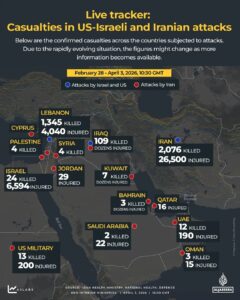
Introduction Due to its unique geographical position, Afghanistan has historically been an Arena of competition among major powers. From the influence of Britain and the Soviet Union to the United States’ involvement and ongoing regional conflicts, the country has consistently remained at the intersection of competing strategic interests. When a country holds such a strategic location, it inevitably becomes more vulnerable to the rapid spillover effects of global and regional tensions. On February 28, 2026, the United States and Israel—following several weeks of military preparations and escalating rhetoric from President Trump—launched coordinated attacks against Iran. These strikes primarily targeted Iran’s military assets and senior leadership within the Islamic Republic. During the course of these operations, The Supreme Religious Leader of Iran, Ayatollah Ali Khamenei, fell victim to the incident. Subsequently, Iran’s Assembly of Experts appointed Mojtaba Khamenei, his son, as his successor. In response, Irdan launched retaliatory attacks against United States military bases across the region, as well as energy infrastructure belonging to Israel and several Gulf countries. According to statistics, as of April 4–5, 2026, 2,076 Iranians have fallen victim in this conflict, while 26,500 individuals have been injured. and 6,594 were injured, while the United States reported 13 military personnel killed and around 200 wounded. The conflict quickly escalated into a broader regional war, drawing in much of the Middle East. In a significant strategic move, Iran also blocked the Strait of Hormuz, triggering a global energy crisis. In response, international efforts to reopen the strait intensified, and the International Energy Agency (IEA) released approximately 400 million barrels of oil from its strategic reserves to stabilize global markets. Against this backdrop, a critical question emerges: what are the political, economic, and security implications of this conflict for Afghanistan? This analysis seeks to explore and answer that question.
Political and Security Implications
Instability in Iran carries significant political and security implications for the Islamic Emirate of Afghanistan. Although Tehran has not formally recognized the Islamic Emirate, it has maintained diplomatic relations with it since 2021 and is considered one of its most important regional partners. Despite ideological differences, a history of mutual distrust, and occasional border and water disputes, the two sides have preserved relatively close political ties over the past five years. Cooperation between the Islamic Emirate and Iran has covered several key areas, including the management of their approximately 900-kilometer shared border, water-related issues, migration, trade, and security coordination. Their shared opposition to the United States played an important role in shaping their relationship even before 2021. Some reports suggest that Iran provided military support to the Islamic Emirate in the past. Following the Emirate’s return to power, these ties have further strengthened, partly due to this earlier history of engagement. If the current conflict leads to the collapse of the Islamic Republic of Iran, the Islamic Emirate would face a major political shift. On one hand, it would lose one of its most important regional partners. On the other hand, any future government in Iran—whether democratic or aligned with the United States—would likely reassess its relationship with the Islamic Emirate. This could result in a cooling of bilateral relations, particularly if U.S. expectations of the Emirate are mirrored by a new Iranian government. Such expectations may not be acceptable to the Islamic Emirate. As a result, diplomatic representation, border coordination, and economic cooperation could all come under review. This might even extend to the closure of Afghan embassies and consulates currently operating under the authority of the Islamic Emirate. These developments would likely increase instability along Afghanistan’s western border and impose additional economic and security burdens on the Emirate. Such outcomes represent some of the key negative political and security consequences of the Iran–United States conflict for Afghanistan. Another possible consequence of a major political collapse or regime change in Iran is the outward movement of radical elements or armed actors seeking refuge abroad. Afghanistan, due to its proximity, could become a likely destination. If such a scenario unfolds, it would have serious political and security implications. Afghanistan is still widely perceived as a haven for militant groups, and the arrival of Iranian extremists could further damage its relations with Western, Arab, and regional countries. Additionally, if members of Iran’s current military establishment were to relocate to Afghanistan, there is a risk that they could launch operations against a new Iranian government from Afghan territory. In response, the government might target them inside Afghanistan. This would create serious security challenges and could significantly destabilize the Afghanistan–Iran border. Beyond bilateral relations, political developments in Iran are also likely to influence Afghanistan’s internal political landscape. Over the past decades, several major Afghan political parties—both Shiite and non-Shiite—such as Hezb-e Wahdat, Harakat-e Islami, and Jamiat-e Islami, have maintained close ties with Tehran. If these relationships are disrupted, existing channels of influence and mediation could weaken or disappear, leading to increased political uncertainty. There is also a possibility that political leaders or affiliated individuals who relocated to Iran after August 2021 may return to Afghanistan, further affecting the domestic political balance. Another possible scenario is that the current Iranian system does not collapse but instead becomes significantly weakened. A weakened Iran could have both positive and negative implications for Afghanistan. On the positive side, many of Afghanistan’s neighbors are nuclear-armed states, and the emergence of another nuclear power in the region could pose long-term security risks. The current relationship between Afghanistan and Pakistan serves as a clear example of such challenges. Therefore, a weakened Iran that is less likely to develop or maintain nuclear capabilities could be seen as a relative security advantage for Afghanistan. On the negative side, however, Iran’s economic weakening would likely have adverse effects on Afghanistan. Reduced economic capacity in Iran could lead to a decline in bilateral trade, negatively impacting Afghanistan’s already fragile economy.
Economic Implications
Iran is considered one of Afghanistan’s most important economic partners. In 2025, the volume of bilateral trade between the two countries reached approximately 3.5 billion USD. Since late 2025, the closure of trade routes through Pakistan has further increased Afghanistan’s reliance on Iran as an alternative corridor. As a landlocked country, Afghanistan depends heavily on its neighbors—particularly Pakistan and Iran—for access to seaports. For nearly six months, border crossings with Pakistan have remained largely closed, yet the impact on Afghan markets has been partially managed through the use of Iranian routes. However, with Iran now under military attack, Afghanistan’s economy will inevitably be negatively affected. These impacts can be understood in several key areas: First, the seaports of Karachi and Gwadar in Pakistan have already been inaccessible to Afghan traders. Now, Iran’s major ports—Bandar Abbas and Chabahar—have also become largely unusable due to insecurity and the threat of attacks by the United States and Israel. As a result, Afghanistan’s maritime trade with Arab countries and the wider global market has been reduced to near zero. This situation poses a serious challenge to the country’s economy. Second, Afghanistan imports approximately 584 categories of goods from Iran, the majority of which are food products. Due to the ongoing conflict, Iran has restricted exports of agricultural goods and food items in order to meet its domestic needs. This has had a direct negative impact on Afghanistan’s food market, contributing to rising prices. For example, noticeable increases have been observed in the prices of tomatoes and potatoes. Third, Afghanistan exports around 600 million USD worth of goods to Pakistan and approximately 70 million USD to Iran, while importing nearly 5 billion USD in goods from these two countries combined. Moreover, a significant portion of Afghanistan’s global trade passes through these same routes. With the outbreak of war in Iran and the closure of its maritime access, combined with the ongoing disruption of trade routes through Pakistan, approximately 66.1 percent of Afghanistan’s imports and 81 percent of its exports are affected. This represents a severe and widespread disruption with far-reaching negative consequences for the national economy. Fourth, wars generally produce psychological effects on markets, and the conflict in Iran has had a similar impact on Afghanistan. Some traders, anticipating shortages, engage in hoarding or artificially increase prices, expecting to sell goods later at higher rates. Others exploit the situation opportunistically by raising the prices of goods that are not even imported from Iran. Such behavior further distorts the market and adds to the economic pressure faced by ordinary citizens.
Implications for Afghan Migrants
One of the most significant consequences of the war in Iran is its impact on Afghan migrants residing in the country. Iran hosts more than four million Afghan migrants and workers. Historically, periods of economic hardship or political instability in Iran have often been accompanied by increased hostility toward foreign populations. This has included discrimination, forced deportations, arrests, restrictions on employment, and, in some cases, even executions. More recently, following the 12-day conflict with Israel, Afghan migrants faced intensified crackdowns, including raids, detentions, mass deportations, and accusations of collaboration with foreign actors. As a result, many were either forcibly expelled or subjected to punitive measures. In the current conflict between Iran and the United States, similar narratives have emerged. There are claims that Afghan migrants were actively involved in protests before the war or participated in demonstrations in exchange for financial incentives from external actors. On this basis, Iranian authorities have increasingly resorted to arrests and forced deportations of Afghan migrants, representing a major negative consequence of the ongoing conflict. At the same time, Iran appears to be framing the issue of Afghan migrants as a security concern—a process often referred to as securitization. Authorities have suggested that Afghan migrants may have engaged in espionage activities for Israeli intelligence (Mossad) during the conflict, portraying their expulsion as necessary for national security. Large-scale forced deportations under such conditions have created serious challenges for the Islamic Emirate of Afghanistan. On the one hand, this situation has triggered a humanitarian crisis that is difficult for the authorities in Afghanistan to manage. On the other hand, the sudden return of large numbers of migrants is likely to place significant strain on the country’s already fragile economy. This may lead to increased poverty and unemployment, rising prices, greater pressure on markets, and additional burdens on infrastructure and public services. Furthermore, there are potential security risks associated with this development, which can be understood in two dimensions. First, there is the possibility that intelligence operatives could enter Afghanistan among returning migrants. Second, due to widespread poverty and lack of employment opportunities, some returnees may be drawn to join various groups—particularly those opposed to the Islamic Emirate. This could further complicate Afghanistan’s already fragile security environment.
Conclusion
The Iran–United States–Israel conflict is not merely an external war for Afghanistan; it carries deep and multidimensional political, security, and economic consequences. This analysis demonstrates that, due to its geographic position, Afghanistan continues to bear both direct and indirect pressures arising from regional power rivalries. From a political and security perspective, any weakening or potential transformation in Iran would mean the loss of one of the Islamic Emirate’s most important regional partners. This could create new challenges in foreign policy, border management, and regional relations. At the same time, instability in Iran may increase insecurity along shared borders and further expose Afghanistan to the risk of becoming a refuge for armed or extremist groups. Economically, the conflict represents a serious shock for Afghanistan. Trade routes through Iran have been restricted, the supply of food has declined, prices have risen, and a significant portion of Afghanistan’s imports and exports face disruption. The absence of reliable alternative routes, combined with ongoing constraints on trade through Pakistan, has further complicated the situation. The most immediate and severe consequences, however, are faced by Afghan migrants. Increasing pressure, arrests, and forced deportations in Iran not only create a humanitarian crisis but also intensify economic, social, and security challenges within Afghanistan. The large-scale return of migrants is likely to increase unemployment, poverty, and potential instability, making its management a major test for the authorities. Overall, this conflict highlights Afghanistan’s continued vulnerability to external developments. If the Islamic Emirate seeks to reduce these risks, it must adopt practical and long-term measures to diversify its economy, balance its regional relationships, and strengthen internal stability. Without such efforts, similar crises in the future will continue to impose high costs on the country.
Recommendations
- The Islamic Emirate should move away from one-sided foreign policy dependence and establish balanced relations with a wider range of regional countries. This would ensure the availability of alternative options during times of geopolitical change.
- It is essential to develop alternative trade routes, particularly through Central Asia, as well as to expand air corridors. A long-term strategic plan in this area would help prevent economic paralysis if one or two major routes are disrupted.
- In the economic sector, there is a clear need for emergency planning mechanisms, including the stockpiling of essential food items, price control measures, and the prevention of hoarding, to maintain market stability.
- From a security standpoint, border control with Iran should be strengthened to prevent the potential entry of armed elements. At the same time, maintaining internal stability requires a degree of political flexibility and the building of public trust. Strong domestic legitimacy remains the most effective safeguard against external pressures.
References:
[1] AJLabs. “US-Israel attacks on Iran: Death toll and injuries live tracker”, Aljazeera, 3rd April 2026, Access link: [1] R. Ayar. “Instability Next Door: Iran’s Crisis and Its Implications for Afghanistan”, Middle East Policy Council, March 18, 2026, Access link: [1] Veda Qalandari. “Iran bans all agri-food exports to protect domestic supply”, Pajhwok Afghan News, March 4, 2026, Access link